
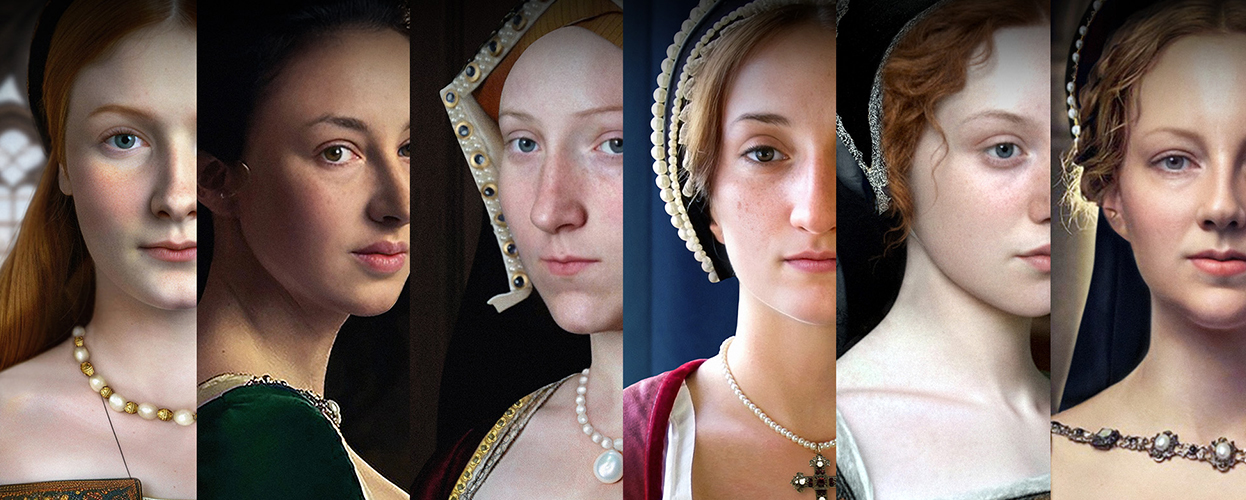
Have you ever wondered what King Henry VIII and his six wives really looked like? We have dug into the history, analyzed the portraits, and built facial reconstructions based on the best evidence out there.
To see the reconstructions in motion, watch the video below. Otherwise, read on!
Wife #1: What did Catherine of Aragon look like?
Catherine of Aragon was not your typical dark haired Spanish Princess.
Let’s talk about Henry VIII’s first wife, Catherine of Aragon, and maybe clear up some myths while we’re at it. You can forget the Hollywood version with dark hair and smoldering dark eyes. Catherine was actually a redhead with pale skin, bright blue eyes, and a round face. She was considered a classic Tudor beauty and not the typical Spaniard look.

Now, even though we have solid descriptions of her appearance, figuring out what Catherine really looked like is a bit of a mess because most portraits we think are her don’t actually match up. This is the so-called “portrait of a girl.” It’s believed to be a young Catherine and looks a lot like her sister Juana, whose portrait is confirmed.

But then we get a bunch of other paintings that are supposedly of a teenage Catherine, and things start to fall apart. One famous portrait by Michael Sittow that is often linked to her might actually be of her sister-in-law, Mary Rose Tudor. Even the museum it’s displayed in labels it as Mary Rose to this day.
Confirmed Portraits of Catherine of Aragon
The first confirmed portrait of Catherine isn’t until c.1520-25, when she was about 35. And honestly, it doesn’t really look like the earlier ones. You’d barely think they were the same person. Then we’ve got two miniatures by Horenbout, both confirmed to be of Catherine, but even they don’t quite look the same. Same artist, same subject, but somehow different features.

Reconstructions of Catherine of Aragon
So, to make sense of it all, I created two reconstructions – one based on the sitter portrait, likely of a young Catherine, and one from the Horenbout miniature of an older Catherine. So, let’s take a look at the face of Catherine of Aragon.


Taking a look at the reconstructions, what do you think? Which do you think is the real face of Catherine of Aragon? Or, is this just two portraits of the same woman at different stages of life?
There are additional re-creation images of Catherine of Aragon in this article.
Wife #2: What did Anne Boleyn look like?
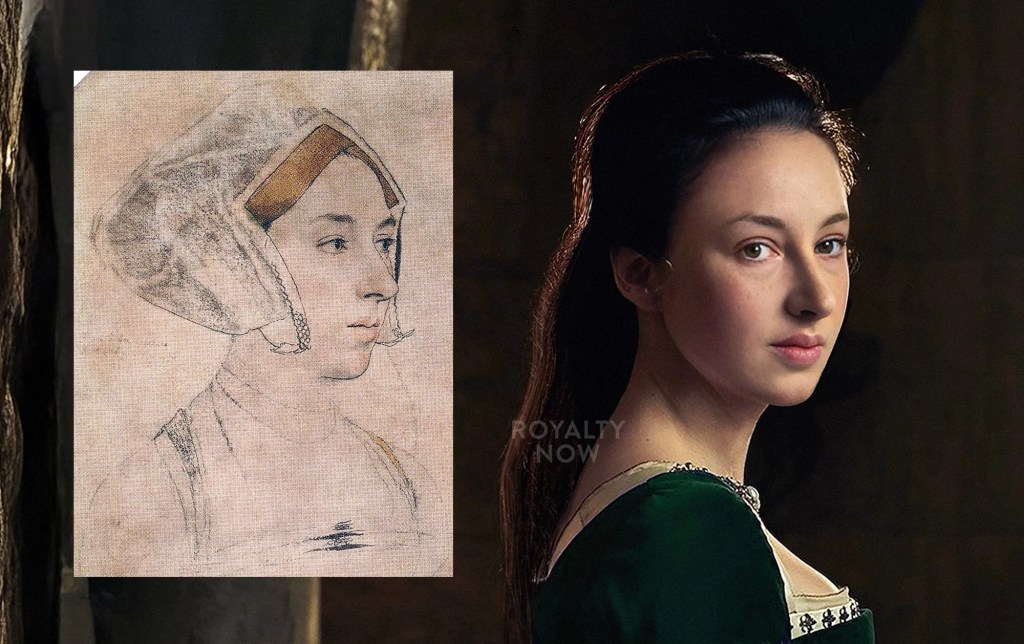
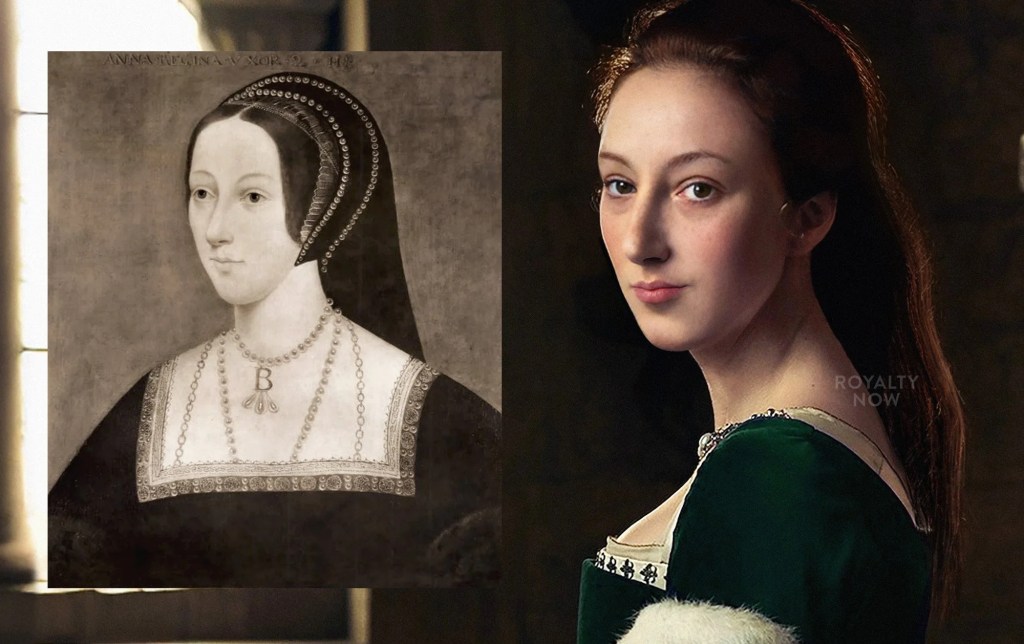
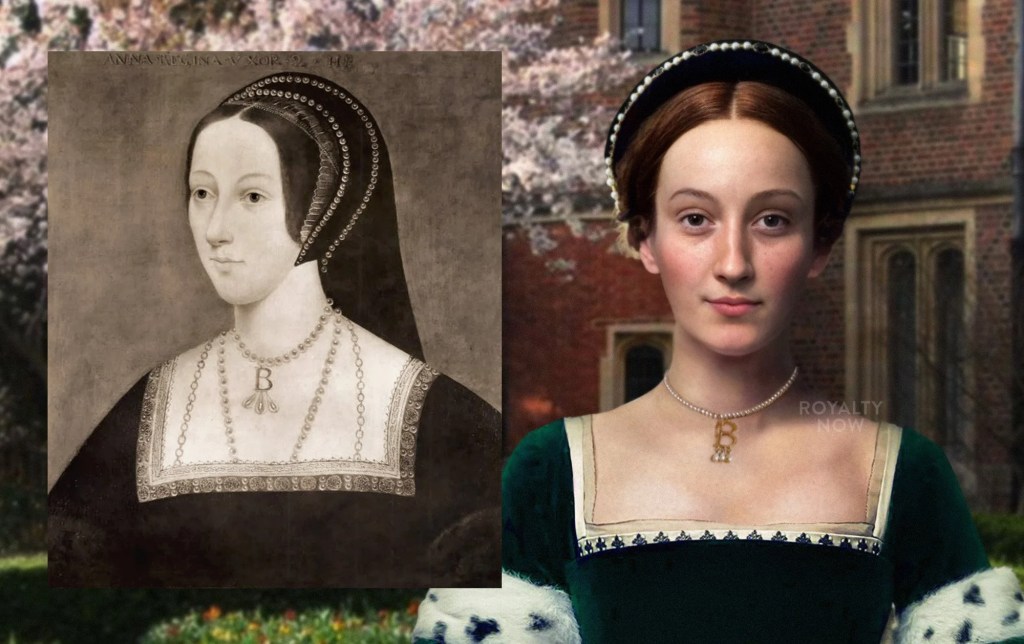
The real face of Anne Boleyn has sparked centuries of debate. Henry VIII’s second wife has long been painted as a seductive temptress, which only fuels the fascination with what she actually looked like. The problem is we don’t have a single surviving painted portrait from her lifetime – only later copies, all showing her with slightly different features.
Eyewitness Accounts
Eyewitness accounts describe her striking dark eyes, a long graceful neck, and a wide full mouth. The only image we know comes from her life is a battered medal that shows a very different Anne from the one shown in later portrait copies with strong features, a prominent nose, and an English-style gable hood.

There’s even reason to think Anne might not have been the dark-haired beauty we picture today. She may have been a redhead, or at least had some auburn tones, based on newer evidence. Check out our latest video on Anne to dive deeper into that.

Reconstructions of Anne Boleyn
For my reconstructions, I drew from two intriguing sources: a 1926 photograph of what’s believed to be the long-lost Lumley portrait, possibly the only painted likeness made while Anne was queen, and a sketch linked to Hans Holbein, thought by some to be the preparatory drawing for a formal portrait of the queen. So, with all this in mind, let’s uncover what Anne Boleyn may have really looked like.
There are additional re-creation images of Anne Boleyn in this article and this article.
Wife #3: What did Jane Seymour look like?
Jane Seymour wasn’t exactly the court’s top pick for Henry’s next queen, and honestly, people were confused by his choice. By Tudor standards, Jane was considered pretty plain. She was 27 when she married Henry, which was on the older side for a royal bride then (not now!), with very pale skin, dark blue or gray eyes, and average height.
Plain Jane?
Ambassador Chapuys called her “no great beauty,” and Sir John Russell said she needed a lot of help – fine clothing, jewelry, the works – in order to stand out. Her predecessor, Anne Boleyn, by contrast, didn’t need much to command attention.

But that quiet, modest image did work in Jane’s favor. After the chaos of the Anne Boleyn period, Henry was ready for someone more reserved, and Jane played the part perfectly.
The Hans Holbein Portrait of Jane Seymour
When it comes to portraits, we’ve really only got one solid likeness. Hans Holbein painted her in stunning detail, showing off her lavish wardrobe and love of embroidery. You can see her sleeves decorated in the blackwork style, which Katherine of Aragon had originally popularized in England.

One thing Jane was firm on was the gable hood. It’s not the most flattering headdress, but she wore it exclusively. It was a clear signal that she was nothing like Anne Boleyn, who favored the trendier French hood.
Reconstruction of Jane Seymour

Wife #4: What did Anne of Cleves look like? And was she ugly?
Anne of Cleves was Henry VIII’s fourth wife – and the one history unfairly remembers as “too ugly” for Henry. But the truth is way more nuanced.
After Jane Seymour died giving birth to his only son, Henry’s advisers pushed him to remarry. Politically, Anne of Cleves was a smart match – a Protestant alliance from a powerful German duchy. And with Henry’s reputation in Europe, he was lucky to find a foreign bride who would agree to marry him at all.
First Descriptions & Anne of Cleves’ Portrait
The first English mention of Anne comes from Ambassador John Hutton, who casually noted that she wasn’t praised much for her looks. Still, the artist Hans Holbein was sent to paint her. He portrayed Anne in stiff German court dress, facing forward, which some say may have flattered her features, downplaying her large nose and smoothing over some of her smallpox scars.

Henry loved the painting and instantly got excited about the match. So, what else did he know about her? It was reported to him that Anne was tall, slim, and had a “brown complexion,” which in Tudor standards just means a little darker than Jane Seymour’s. Her exact hair color isn’t known, but it was likely blonde or light brown.
An Awkward First Meeting
Personality-wise, early reports were glowing. She was described as kind, gentle, curious, and eager to learn English traditions. But an awkward first meeting left the two on the wrong foot, and Henry’s excitement immediately disappeared. He complained that she wasn’t as pretty as promised, that she smelled bad, and said simply, “I like her not.”

So…Was Anne of Cleves Ugly?
The truth likely lies somewhere in the middle. Foreign accounts call her tall and dignified with charm and intelligence, but she didn’t fit the English beauty standards or Henry’s delusional expectations. By then, the king was overweight, in poor health, and possibly impotent, looking for someone to make him feel young again – and that was never going to be Anne.
Her German style was seen as frumpy, but once dressed in English fashion, it was said that she “so set forth her beauty that every creature rejoiced to behold her.”
So, was she ugly? Not at all. She was probably perfectly average, just not the fantasy Henry had built up in his head.
Reconstructions of Anne of Cleves
So, let’s see Anne of Cleves brought to life from two images – one by Barthel Bruyn showing her in a 3/4 view, and the famous Hans Holbein image.


Wife #5: What did Katherine Howard look like?
Katherine Howard was the fifth wife of Henry VIII, a young unexpected choice for queen, which she ultimately paid the price for. In the autumn of 1539, Catherine would travel from her modest country home in London to the glamorous Tudor court, where she pretty much immediately caught Henry’s eye.
As one source put it, “The King’s Highness cast a fantasy to her the first time he saw her.“
Do we have a true portrait of Katherine Howard?
We don’t have a single verified portrait of Catherine left for us today. Maybe one was never made, or maybe they were destroyed after her downfall.
Descriptions are also vague – that she was short, slender, fresh-faced, and lovely. No real detail there.
Over the years, historians have floated a few possibilities for portraits that might be Catherine. First, there’s a Holbein portrait that was identified as Catherine in 1909, but is more often tied to the family of Thomas Cromwell, possibly being one of his daughters. The date of the portrait and the age of the sitter don’t quite line up to be Catherine.

There’s also a miniature image. The subject wears a gold necklace known to have belonged in the royal collection of jewels, but that’s not solid proof either, with some believing that this is actually a portrait of Anne of Cleves.

There’s also a striking portrait that hangs in the Metropolitan Museum. It’s from the right era and shows a young woman dressed in the style and status of a Tudor queen. Other possible sitters have been ruled out, so I consider this the most likely option. This could definitely be the face that captivated Henry in 1539.

Reconstructions of Katherine Howard
So, let’s take a look at the face of Catherine Howard brought to life from the miniature and from the Metropolitan Museum image.


Wife #6: What did Catherine Parr look like?
Now, let’s move on to Henry’s sixth wife, Catherine Parr, known as “the one who survived” Henry VIII. But somehow, she was also the queen that everyone forgets. Only a handful of portraits of Catherine exist today, and nearly all of them were misidentified at some point. Honestly, it kind of fits her reputation as Henry’s most overlooked queen.
Historians have only recently identified portraits of Catherine Parr
So, how did historians actually figure out which ones are really her? Not by her face, but by her jewelry – specifically, a crown-shaped jewel that she wore on her chest that matches records from her wardrobe.
The two portraits we can confidently say are Catherine were painted from life, one around 1545 and another from 1547, both likely by the artist known as Master John. From these images, Catherine was beautiful. She had fair skin, dark blonde or reddish hair, and sharp gray eyes. Tall and slender, she always dressed to impress. She was also known to be smart, funny, and full of life.

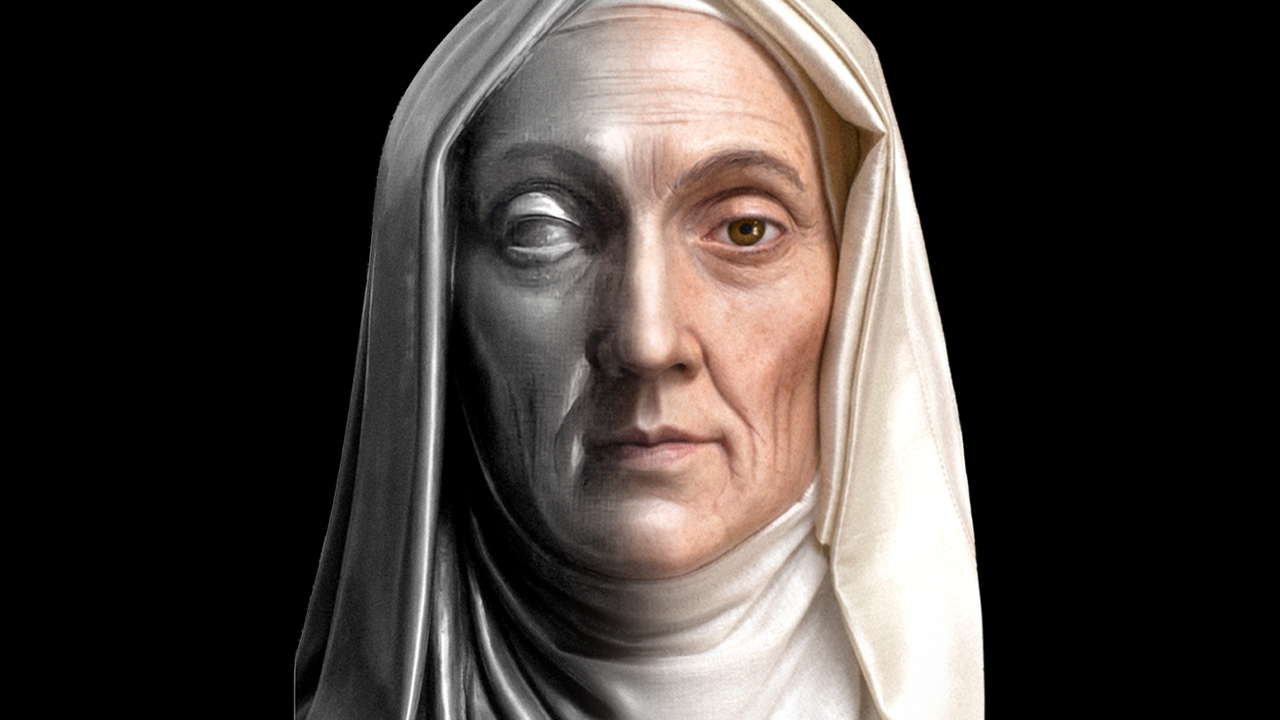
Reconstructions of Catherine Parr
Personally, I love this 1547 portrait. There’s something so striking about her cat-like eyes and calm confidence. It feels more real than other Tudor portraits to me. So, that’s the image I used for this recreation. Let’s take a look at the real face of Catherine Parr.




Leave a Reply