
You know that feeling when you step outside, look up at the sky, and see something totally unexpected? Sometimes the moon is red, the clouds look different, or the sky is a different color. It’s a pretty strange feeling.
Sometimes, the weather is like that too, raising a lot of questions. Why is it suddenly freezing when it was warm yesterday? What causes a storm’s severity? Why does it sometimes seem like disasters happen out of the blue?
Science can often explain these things, but some events and phenomena remain unexplained. And even when scientists can explain them, these events remain curious, to say the least.
Here are a few historical weather and astrological events that baffled people at the time and remain puzzling today.
One: Halley’s Comet Passes By
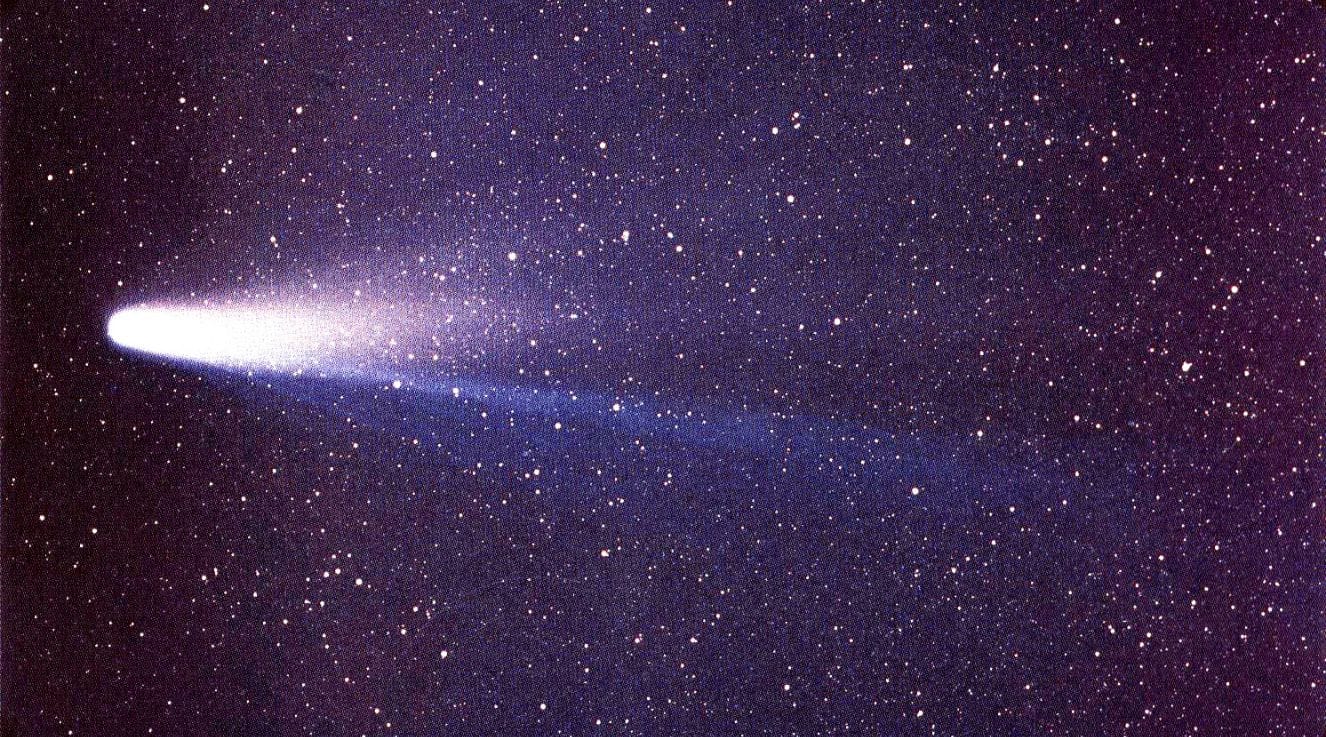
Halley’s Comet is the most famous comet in the world, but did you know it also helped disprove a long-held astrological theory? Until 1705, when its namesake, Edmond Halley, observed the comet, astronomers believed comets could pass through the solar system only once.
In 1705, Halley used Isaac Newton’s theories of gravity and planetary motion to calculate the orbits of recorded comets. He found similarities in the orbits of comets reported in 1531, 1607, and 1683 and suggested that this trio was actually one comet making return trips. Halley calculated the orbit of about 76 Earth years and correctly predicted that the comet would return in 1758, so people named it after him.
Since Halley’s Discovery, scientists have linked Halley’s Comet to other comet sightings dating back as far as 2000 years. Although records of Halley’s Comet reach back to 467 BC, Chinese historians documented the first definitive observation in 240 BC in the chronicle “Records of the Grand Historian,” or Shiji. At the time, people thought it heralded major social and political events; for example, in 451, they associated the comet with Attila the Hun’s defeat.
The Bayeux Tapestry, which illustrates the Battle of Hastings and the Norman Conquest of England, depicts Halley’s Comet as early as 1066. In one scene, it appears as a large, flaming star.
Halley’s Comet most recently appeared in 1986. NASA and other space organizations tracked it and documented its closest approach to Earth at 39 million miles. It will return in 2061, so keep an eye out.
Two: The Year Without a Summer
Although some parts of America experience similar weather year-round (we’re looking at you, Florida), New England has distinct seasonal changes. From warm, sunny summers to cozy, picturesque falls, winter wonderlands, and vibrant springs, New England truly has it all—but one year, it didn’t.
In 1816, summer never came to New England. The Year Without a Summer affected the entire Northern Hemisphere, but most readily available sources come from New England. People in England and other regions also called 1816 the Poverty Year or the Year Eighteen Hundred and Froze to Death.
In short, the conditions stayed absolutely freezing, even throughout the summer months when most farmers finished their yearly tasks. The National Park Service writes:
“May frost killed off most of the crops in New York, Massachusetts, New Hampshire, and Vermont. In June, heavy snow smothered the ground in Albany, New York and Dennysville, Maine, while frost persisted for five consecutive nights in Cape May, New Jersey. The relentless cold weather extended into late summer, in what would have normally been harvest season. In July, lakes and rivers remained frozen as far south as northwestern Pennsylvania, while frost remained in Virginia into late August. Temperatures dipped from above-normal summer temperatures to near-freezing within mere hours.”
This caused a huge subsistence crisis because people had little to no food for the remainder of the year, hence the name Poverty Year. At the time, the cause was unknown. We now know that an earlier volcanic eruption on the other side of the world caused a full-scale climate crisis.
In April 1815, Indonesia’s Mount Tambora erupted with a blast nearly 100 times as large as Mount St. Helens’ 1980 eruption. The eruption formed a massive particle cloud that traveled across the globe, reflecting sunlight. Less sunlight meant unseasonably cold weather. Fortunately, the cloud dissipated by the following year, and the weather returned to normal, bringing summer back.
Three: The Dust Bowl
In the 1930s, the southern plains of the United States experienced a severe drought. Crops couldn’t grow, and high winds and the swirling dust swept up from the ground caused the deaths of livestock and people. This intensified the economic effects of the Great Depression, which were felt across the country.
Several factors contributed to the Dust Bowl, and weather was only one. Government policies encouraged people to move westward, bringing in new, inexperienced farmers. Increased demand for wheat during World War I also drove prices up before they suddenly dropped to dismal levels after the stock market crash.
Worse, even if these farmers wanted to sell all their wheat at lower prices, the lack of water made it harder to grow. This exposed the over-plowed farmland, and the dry soil created dust storms that caused further devastation.
People widely called the storms “black blizzards” because of the dirt’s color. Some of these storms carried soil from Texas and Oklahoma as far as the Atlantic Ocean. The dust worked its way through the cracks of people’s homes. People closer to the storm’s center developed “dust pneumonia.”
People coined the term “Dust Bowl” after the worst of the storms on April 14, 1935. On that day, the dust was so thick, even on the East Coast, that news reports called the event Black Sunday.
President Franklin D. Roosevelt sought to address the environmental factors that led to the Dust Bowl in the New Deal. He started programs that put local farmers back to work planting windbreak trees and supported new farming techniques. Yet this didn’t stop people from leaving the region.
People displaced by the Dust Bowl became known as “Okies”. Many moved to California, where wages were little better. John Steinbeck’s The Grapes of Wrath focuses on an Okie family and the challenges they face. Many critics consider John Steinbeck’s The Grapes of Wrath one of the world’s most influential novels.
Four: The Great Molasses Flood
This next story isn’t really about a weather event, but about a sudden temperature spike that caused it. If you know Boston, you know it gets pretty cold in the winter. In a typical New England city, temperatures usually stay below 32 degrees Fahrenheit, and residents consider even that mild.
On January 15, 1919, the temperature suddenly rose from frigid temperatures to around 40 degrees Fahrenheit. On Commercial St., a loud rumbling echoed, and the source proved to be a sticky situation.
The Purity Distilling Company operated a factory there, where it stored tanks of molasses shipped from the Caribbean. One tank, built 4 years earlier in 1915, was 50 feet tall. Residents knew it leaked, even though the company had built it just a few years earlier.
A leaky molasses tank and a sudden temperature increase don’t mix well. What started as a small crack in the tank eventually ruptured.
Molasses flooded the streets, its sickly sweet smell filling the air. Moving at roughly 35 miles per hour, a massive wave of molasses knocked an elevated train off its tracks, swept buildings from their foundations, and suffocated workers and bystanders in its path.
The disaster claimed 21 lives and left 150 people injured.
Even after all that, they still had to clean up the molasses, and that wasn’t simple. This is where the science lesson comes in. They had to break down the molasses before they could clean up the sticky wreckage. So after losing its firehouse, the Engine 31 fireboat helped transport salt water to break down the molasses.
The Purity Distilling Company was fully aware of the locals’ complaints before the Great Molasses Flood, but originally tried to blame the disaster on a plot to bomb the tank. Needless to say, a class-action lawsuit followed, and in 1925, the court ruled the company at fault.
On a slightly more positive note, this tragedy helped change the way the United States regulates industries. In his book Dark Tide, historian Stephen Puleo writes, “regulations stipulating that engineers needed to sign and seal plans, building inspectors needed to examine projects, and that architects needed to show their work all came as a result of Boston’s molasses flood.”
Five: The Great Meteor Procession
Imagine seeing a meteor fly across the sky. Some of us have been lucky enough to see this, but imagine many meteors. On February 9, 1913, people saw exactly that.
From Canada to the northeastern United States to Bermuda, and even two ships at sea near Brazil, people witnessed a procession of 40-60 fireballs flashing overhead. It was unlike any other meteor shower in history. In a typical meteor shower, streaks of light radiate outward from a single point. These meteors traveled horizontally in a uniform path.
A meteor shower is usually quick, visible for only a few hours. But what set this one apart was that each meteor remained visible for about a minute. Several people saw the entire procession.
Clarence Chant collected over 100 reports in the Journal of the Royal Astronomical Society of Canada. Many of them also reported strange rumbling sounds. This could indicate that the meteors were relatively close to Earth when they disintegrated in the atmosphere, which could also explain their longer visibility.
The exact cause of the Great Meteor Procession is still unknown, even to modern scientists. One NASA scientist suggested the meteors could be the last remnants of a ring system like Saturn’s. Whatever the cause, the phenomenon continues to captivate scientists and audiences alike.
What Does the Past Teach Us About the Future?
These weather and astrological events remind us that, despite advances in science, we may never have solid answers for why things happen. And even if we do, that doesn’t take away from the novelty of some pretty extraordinary events.





Leave a Reply