

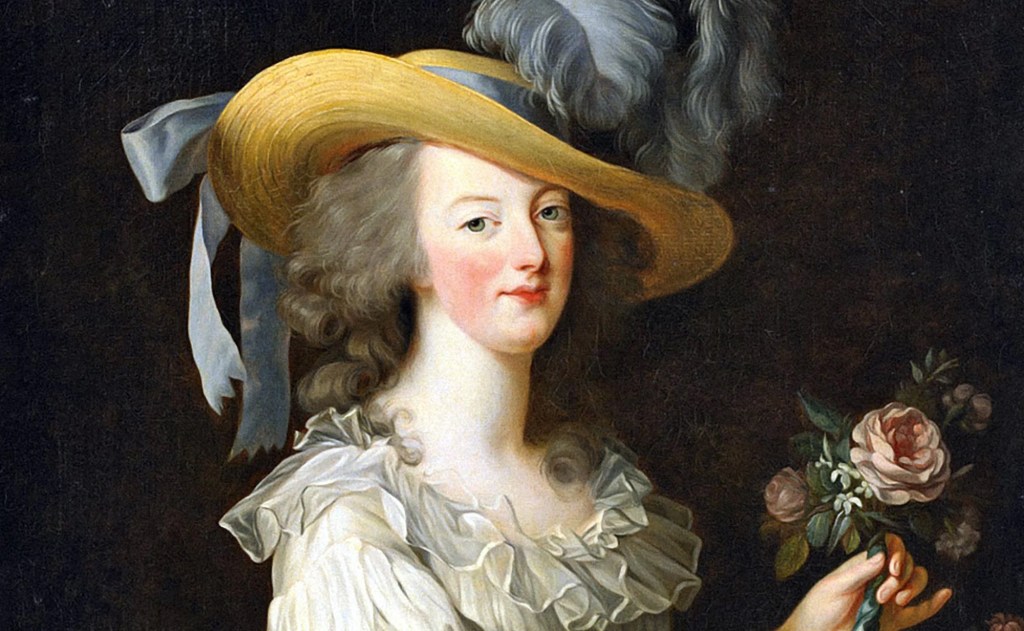
We’re all familiar with the French Queen known for excess, glamor, and a trip to the guillotine during the French Revolution. But what did Marie Antoinette really look like? Well, behind every glamorous portrait lies a hidden truth that’s revealed by her death mask: Marie Antoinette was not the classic beauty we think of today.

Today, we’ll talk about her appearance, her beauty routines, and portraits, and then, I’ll reveal never before seen facial reconstructions made from her death mask. Watch the full video for motion and a modern version!

Early Descriptions
As a young girl growing up in Austria, Maria Antonia, as she was known then, was the 15th of 16 children born to Empress Maria Theresa.
During this time, there was a lot of premium placed on girls’ looks, because at the end of the day, she was a marriage pawn.
Marie was noted for being pretty but not in a conventional way.
In fact, her tutor wrote in 1769 of the teenage Marie: ‘it would be possible to find features of a more regular beauty: I doubt if it is possible to find any more agreeable.’
This is a vague description, but one I interpret to mean that maybe her features were nothing special, but her smile, personality, and joy for life brought out her beauty.
Proto-Beauty Bootcamp
As her marriage negotiations to the Dauphin of France, Louis-Auguste, commenced, the French Envoy remarked that Marie looked messy, subtly hinting that she wasn’t polished enough for the French court.
So, before Marie could be engaged to the Dauphin, her mother made sure she was put through a makeover.
Experts were brought in from all over Europe. She was fitted with new silk dresses, as well as whalebone corsets that straightened her slouch.
A famed hairdresser, who had previously worked on the King’s mistress Madame de Pompadour, came to make sure her hair was fit for Versailles.
And then, most harshly, her crooked teeth were corrected with some very painful and rudimentary dental procedures. She was made to wear an early form of braces called Fauchard’s Bandeau, a metal horseshoe that was fitted into the palette and systematically tightened using waxed strands of silk over a period of months.
After months of what can only be described as beauty bootcamp, shy little Marie was on her way to France. She would never see her home in Austria again.
Style & Beauty as Queen of France
In France, following her marriage to Louis, she shed the restraint that characterised her motherland: her cheeks would be rouged, her hair piled high on her head, and then, just for good measure, adorned with feathers.
While one nobleman, Count Tilly, remarked that the Queen had strange eyes and that she somewhat lacked elegance, he deeply praised her beautiful complexion. The flushed cheeks and pale, powdered skin were a true mark of Rococo fashion which Marie in many ways defined. This makeup style gave the wearer a soft romantic look – while also marking you as a member of the highest classes.

To keep her skin glowing, Marie placed great importance on toning and moisturizing – not unlike we do today. Shed used an array of products that sound quite horrifying to the modern sensibility, like Eau Cosmetique de Pigeon – An elaborate recipe involving distilling ingredients like melons, lemons, cucumbers, and stewed pigeons for 17 – 18 days.
She also reportedly used facemasks with ingredients that are more easily replicated like: Cognac, milk, lemon juice, and egg white.
In keeping with the styles of the time, Marie Antoinette would powder her hair, a messy process that involved applying an oil, much like we might use a pomade today, and then powder would be applied, gripping to the oil and coating the hair. I can’t imagine trying to wash all of that out.
Sometimes a faux birthmark would be drawn on the cheek, or as Marie favored, a tiny heart near the corner of her lip.
Madame Vigee-Lebrun painted her several times, and noted that she had a peculiar thin, oval shaped face, but that the rest of her features were rather regular.
Marie’s Best Feature? Her Complexion
She, like Count Tilly, notes the ‘radiance of her complexion’, saying that she had never seen one so brilliant – so brilliant in fact that Madame Vigee-Lebrun could not render it to her satisfaction: ‘the colours were lacking with which to depict this freshness, these tones so exquisite…I had found in no other woman.’
Nonetheless, Marie’s distinctive facial features and the way they were rendered by artists may have actually inspired the style adopted by french portrait painters for years to come – an ironic turn of events for the young girl who was assigned a French tutor and hairdresser in Vienna to make her more palatable to the French populace she would come to rule.
Madame du Barry’s portraits are a notable example of how Marie’s face changed portraits: we see a slimming of faces and a drooping of eyes – quite literally copying Marie’s features – that weren’t present in portraits before this time.
The portraits clearly look different from “real life.” So how do we construct what Marie Antoinette really looked like?
The Death Mask & Facial Reconstructions
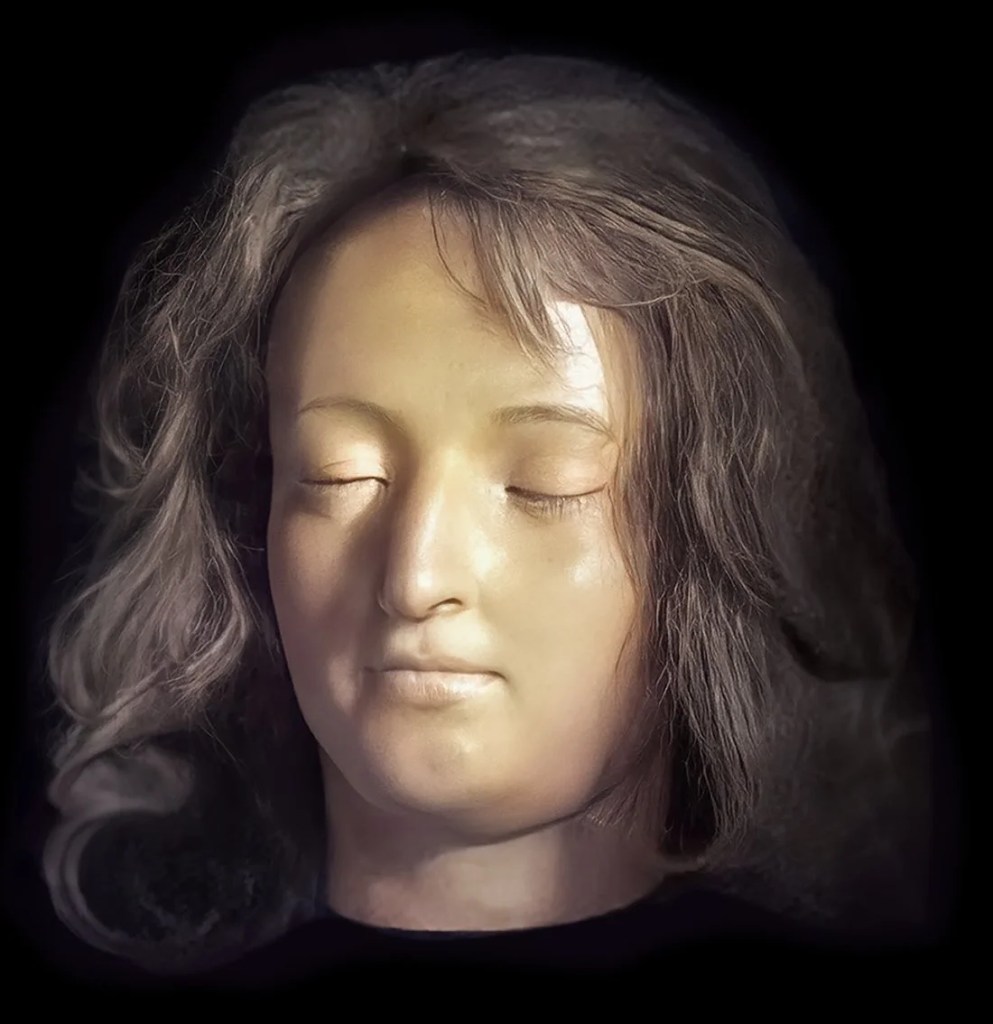
One of the influences for my recreations, which – if authentic – is the most accurate source for her appearance, is the Death Mask of Marie Antoinette, supposedly taken soon after her execution. The mask was taken by a wax worker whose name you may recognize: Anna Maria Grosholtz, more commonly known as Madame Tussaud.
The original Marie Antoinette mask was lost in a fire, so we are left to work with the precious few photographs that capture it.
Is the Mask Authentic?
I’ll flag that its history is disputed: nearly everything we know comes from Tussaud’s 1838 memoirs, dictated to a friend late in life, and historians like Pamela Pilbeam and Kate Berridge consider that book heavily embellished and commercially motivated. Pilbeam’s counterpoint is the one that persuades me most, though – the exhibition really did display wax heads of the guillotined, and someone had to make them. I won’t claim the mask is definitive. But it’s the one likeness of her that had no reason to flatter, and that makes it worth taking seriously.
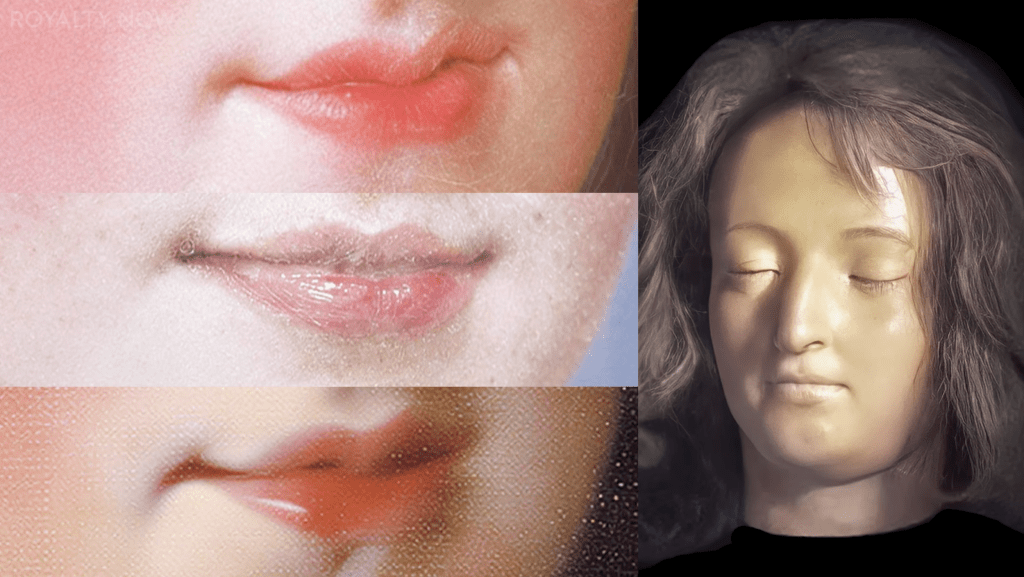
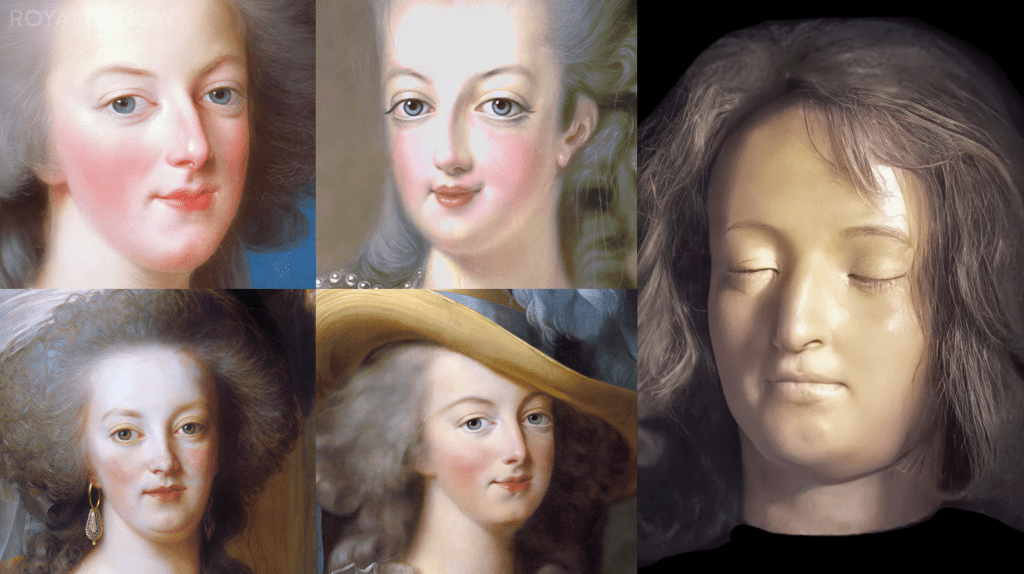
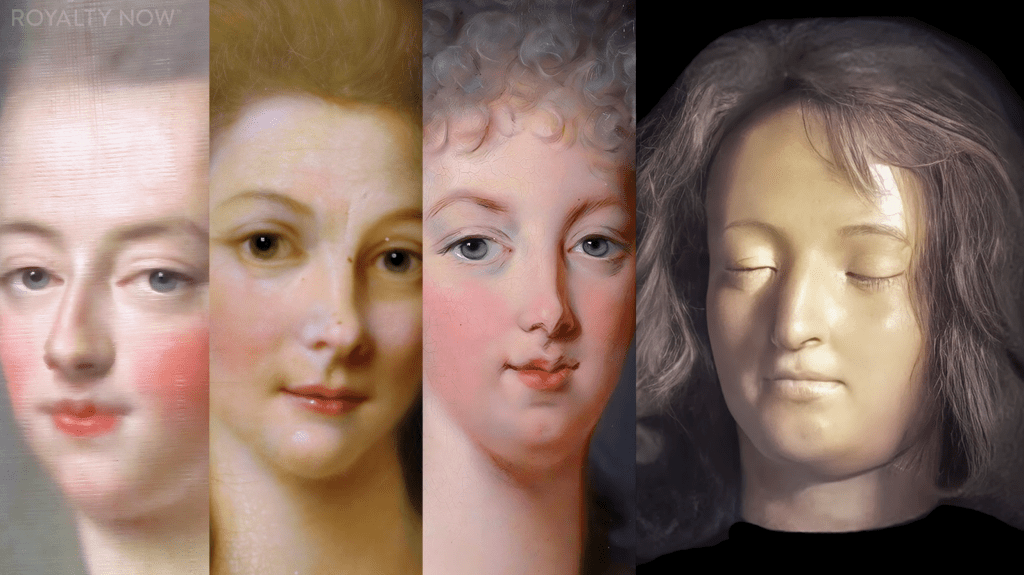
In the painted portraits, we see that her lips are more plump and pinched as was the style at the time, with a fuller upper and more balanced upper lip.
We see her wide set eyes, but they appear large and exaggerated in the paintings. The mask also reveals she has more of a hooked nose in real life, and lower forehead
One thing that marked Marie as having Habsburg heritage, is the famous Habsburg lip. The slightly protruding lower lip was, thankfully for Marie, a diluted version compared to that of ancestors like Charles II of Spain and Leopold I (the Holy Roman Emperor).
Considering all of these sources together – from the paintings, to the sculptures, and, ultimately, the mask, Marie Antoinette’s true appearance begins to emerge.
So, with all that in mind, let’s see what Marie Antoinette may have really looked like, now:




Leave a Reply